
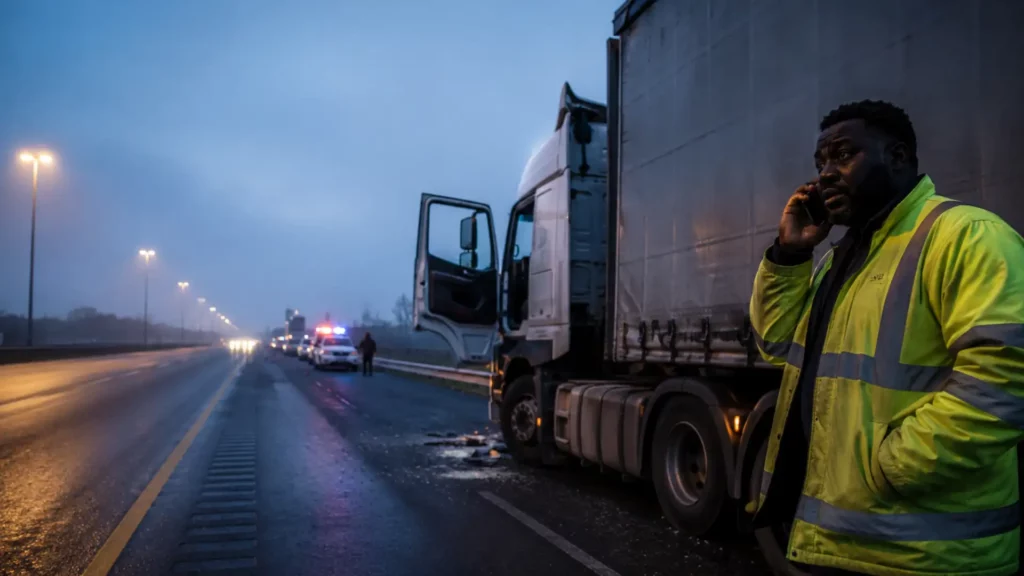
Truck hijacking trends in South Africa during 2026 continue to place serious pressure on logistics operators, fleet owners, transport brokers and cargo owners. Across the country’s busiest freight corridors, organised cargo crime has become more tactical, more coordinated and more commercially damaging.
Although hijacking has always been a known transport risk, the current environment is different. Criminal syndicates now combine route surveillance, GPS disruption, fraudulent collections, insider information and targeted cargo selection. As a result, freight operators are no longer dealing with isolated roadside theft. They are facing structured commercial crime aimed directly at valuable supply chains.
Across Gauteng, KwaZulu-Natal, Durban logistics hubs and the N3 corridor, transport businesses face rising exposure linked to cargo theft, fleet downtime, driver safety, customer penalties and delivery disruption. For operators reviewing risk, this goods in transit cover explained guide also provides useful context on how cargo protection is structured.
In addition, cross-border freight movement into SADC regions has added another layer of exposure. Border delays, overnight parking, reefer vulnerability, documentation issues and regional route risk all increase the financial consequences of a cargo incident.
For this reason, specialist Goods In Transit Insurance has moved beyond a basic compliance requirement. It has become a critical safeguard for cargo value, fleet continuity, customer confidence and long-term transport business resilience.
Truck Hijacking Trends and South Africa’s Freight Risk Environment
South Africa’s road freight sector remains one of the most important logistics networks on the continent. Every day, high-value cargo moves between ports, inland depots, warehouses, factories, farms, retailers and regional export routes.
However, that volume also creates opportunity for organised cargo crime. According to official crime statistics published by the South African Police Service, truck hijacking remains a tracked national crime category, with quarterly figures showing continued pressure on commercial transport operators.
Recent freight-sector reporting has also highlighted concern that recorded figures may not fully reflect the operational reality faced by transporters. The Road Freight Association remains a key industry body for South African road freight operators, and industry commentary continues to warn that cargo crime affects far more than the stolen load.
Meanwhile, cargo owners are placing greater pressure on transport contractors to prove that proper route controls, tracking systems, driver protocols and insurance structures are in place before freight is released.
Business-owned vehicles remain highly attractive targets because the vehicle, the load, the fuel, the trailer and the route intelligence all carry resale or criminal value. Consequently, fleet risk now needs to be managed as a full supply chain exposure rather than a simple vehicle security issue.
Truck Hijacking Trends on the N3 and Major Freight Corridors
The N3 corridor between Durban and Gauteng remains one of Southern Africa’s most important freight routes. It connects Durban Port, coastal logistics facilities, inland warehousing, Johannesburg distribution hubs and regional transport networks.
Because of this, the corridor carries substantial cargo value every day. High volumes of FMCG, fuel, machinery, pharmaceuticals, electronics, agricultural products, retail stock and refrigerated goods move along this route.
At the same time, the N3 creates predictable freight movement patterns. Criminal groups can monitor loading schedules, driver routines, rest stops, delivery windows, staging areas and overnight parking behaviour.
In addition, many operators still rely on repeated routes and familiar stopping points. That predictability can increase exposure when syndicates study movement patterns over time.
High-risk operational areas often include:
- Durban outbound freight routes
- N3 staging and rest zones
- Truck stops and overnight parking areas
- Industrial logistics hubs
- Gauteng distribution corridors
- Warehouse transfer points
- Fuel tanker operating routes
- Cross-border feeder routes
As a result, a hijacking incident on one route can affect far more than a single trip. Delivery failure, customer claims, recovery costs, replacement stock, driver trauma and reputational damage can all follow quickly.
How Truck Hijacking Trends Have Changed During 2026
Current truck hijacking trends show that cargo theft syndicates are becoming more operationally sophisticated. Physical interception remains a threat, but criminals are also using digital, administrative and insider-led methods to access freight.
For example, some incidents involve vehicles being stopped under false pretences. Others involve fraudulent paperwork, staged collection instructions, route manipulation or warehouse-level intelligence.
Common tactics affecting South African freight operators include:
- GPS jamming and tracking disruption
- False authority stops
- Fraudulent cargo collection documents
- Insider information leaks
- Warehouse and depot targeting
- Trailer diversion
- Vehicle cloning
- Cyber-assisted freight fraud
- Route surveillance
- After-hours interception
As these methods evolve, fleet operators need to think beyond locks, trackers and basic vehicle insurance. Instead, they need coordinated route management, driver protocols, cargo control, incident response planning and correctly structured Goods In Transit Insurance.
Furthermore, insurers are increasingly reviewing operational controls before agreeing to certain cargo limits. Tracking compliance, panic procedures, driver training, route deviation alerts and secure parking arrangements can all influence underwriting decisions.
Cargo Theft Exposure Beyond the Hijacked Truck
A truck hijacking rarely ends with the loss of a vehicle or load. In many cases, the wider financial damage becomes the larger business problem.
Once a load is stolen or delayed, the operator may face penalties, replacement transport costs, damaged stock claims, lost customer confidence and increased security requirements. Therefore, the true cost of a hijacking can be much higher than the invoice value of the cargo.
Commercial consequences often include:
- Operational downtime
- Missed delivery windows
- Contractual penalties
- Customer relationship damage
- Fleet recovery costs
- Reefer spoilage losses
- Replacement load costs
- Driver support requirements
- Insurance excess payments
- Higher future premiums
- Supply chain disruption
- Investigation and documentation delays
Even so, some smaller fleet operators still rely on cover structures that were not designed for modern cargo crime. This creates a dangerous gap between the value being transported and the protection available at claim stage.
Cross-Border Truck Hijacking Trends and SADC Freight Risk
Cross-border transport adds another level of exposure for South African logistics companies. Routes involving Beitbridge, Lebombo, Kopfontein and other regional crossings often require extended travel time, documentation checks, waiting periods and overnight stops.
At the same time, visibility can reduce once vehicles move further away from South African operating bases. Communication gaps, route delays, border congestion and regional infrastructure challenges can all increase cargo vulnerability.
Transport operators running regional loads commonly face:
- Border congestion delays
- Driver fatigue exposure
- Extended overnight parking risk
- Cargo tampering
- Fuel theft
- Documentation fraud
- Trailer break-ins
- Route uncertainty
- Reduced recovery speed
- Jurisdictional claims complexity
For this reason, operators moving cargo into neighbouring countries often review cross-border freight risks before finalising cargo insurance limits and route protocols.
Moreover, regional freight contracts often require proof of adequate insurance before loads are awarded. Without the correct cross-border extension, a transport business may be carrying exposure that its policy does not properly support.
Cold Chain and High-Value Cargo Risk During Hijacking Incidents
High-value cargo remains a priority target for organised syndicates. Electronics, pharmaceuticals, alcohol, tobacco, copper, fuel, branded retail stock and FMCG goods are attractive because they can move quickly into illegal resale channels.
However, cold chain loads carry additional risk. A hijacking, forced delay, route diversion or vehicle recovery process can compromise temperature-controlled goods even if the cargo is later found.
Therefore, operators carrying refrigerated or temperature-sensitive cargo need to examine their policy wording carefully. Reefer breakdown, temperature deviation, stock deterioration and delay-related spoilage may require specific extensions.
Operators moving perishable freight can also review cold chain logistics risks when assessing whether their current cover reflects the real value and sensitivity of the cargo being transported.
Port, Depot and Inland Logistics Exposure
Truck hijacking trends do not only affect long-haul routes. Cargo can also become vulnerable around port approaches, container yards, inland depots, warehouse transfer areas and final-mile delivery zones.
Durban Port remains central to South African freight movement, especially for importers, exporters, container operators and inland distribution networks. When congestion or delays occur, loads may spend longer than planned in staging areas, yards or temporary storage locations.
As a result, cargo exposure can increase before the vehicle even reaches the open road. Operators reviewing route disruption should also consider Durban Port cargo disruption as part of their wider freight risk planning.
In many cases, the most vulnerable moments happen during handover. Loading, offloading, documentation checks, driver changeovers and after-hours collections all create opportunities for theft, fraud or dispute.
Why Goods In Transit Insurance Matters
Standard commercial vehicle insurance is not enough to protect against the full financial impact of a cargo hijacking. Vehicle cover may respond to damage or loss of the truck, but it does not automatically protect the goods being carried.
Goods In Transit Insurance is designed to protect cargo while it is being moved. Depending on the policy structure, cover may respond to theft, hijacking, accidental damage, fire, collision, overturning, loading incidents and selected extensions.
Depending on the operation, a policy may include:
- Cargo theft cover
- Hijacking-related cargo loss
- Accidental damage
- Fire and explosion exposure
- Reefer breakdown extensions
- Cross-border transport cover
- Loading and offloading incidents
- Carrier liability
- Contingent liability
- Owner of goods cover
- Hazardous goods extensions
- Debris removal and mitigation costs
Consequently, the right policy must match the cargo type, route profile, contract terms, vehicle use, subcontractor exposure and maximum value carried per load.
Operational Risk Management for Transport Operators
Insurance works best when it is supported by disciplined operational controls. Modern fleet operators are increasingly combining specialist cover with route intelligence, driver management, telematics and incident response procedures.
Practical risk controls may include:
- 24/7 vehicle tracking
- Route deviation alerts
- Driver panic protocols
- AI video telematics
- Secure overnight parking
- Control room monitoring
- Geofencing
- Driver fatigue monitoring
- Pre-approved rest stops
- Load verification processes
- Incident escalation procedures
- Subcontractor compliance checks
In addition, proper documentation can improve claim handling after an incident. Trip sheets, tracking reports, delivery notes, route records, driver statements and communication logs all help establish what happened and when.
Because freight crime is becoming more sophisticated, insurers are paying closer attention to how operators manage preventable risk. Strong controls may support better underwriting outcomes, while weak controls can create difficult claim discussions.
Claims Considerations After a Truck Hijacking
After a hijacking, speed and accuracy matter. The first priority is always driver safety. Once the immediate threat has passed, the operator should follow the policy’s incident reporting requirements and notify the relevant parties as quickly as possible.
Typically, insurers may require:
- Police case details
- Driver statement
- Tracking reports
- Delivery documentation
- Proof of cargo value
- Route records
- Vehicle and trailer details
- Customer correspondence
- Incident timeline
- Recovery reports where available
Therefore, operators should not wait until a major loss occurs before organising their claims information. A clean documentation process can reduce delays and support a more efficient claim outcome.
Why Choose Goods In Transit Insurance From Cross Cover Insurance Solutions
Goods In Transit Insurance from Cross Cover Insurance Solutions is designed around the operational realities facing South African logistics businesses. Our approach focuses on practical freight exposure, commercial transport risk and cargo protection strategies tailored to real fleet environments.
We understand the pressures affecting:
- Fleet operators
- Transport companies
- Owner-drivers
- Cross-border carriers
- Cargo owners
- Freight brokers
- Cold chain operators
- Fuel transport fleets
- Courier businesses
- Distribution companies
- Commercial logistics operations
Our team works with businesses that need commercially realistic cargo insurance solutions aligned to South African transport risk. Instead of treating GIT cover as a generic add-on, we help operators consider cargo value, route exposure, policy extensions, claims requirements and operational controls.
Protect Your Cargo Against Modern Freight Crime
South African transport operators cannot control every route delay, hijacking threat or cargo crime tactic. However, they can improve how prepared they are before an incident occurs.
Specialist Goods In Transit Insurance gives fleet owners, cargo businesses and logistics operators a stronger foundation for managing loss, protecting contracts and keeping operations moving after a serious freight incident.
Frequently Asked Questions About Truck Hijacking Trends
The main truck hijacking trends include GPS jamming, false authority stops, insider information, fraudulent collection documents, route surveillance and targeted cargo theft along major freight corridors.
Many Goods In Transit Insurance policies can cover hijacking-related cargo loss, but the outcome depends on policy wording, cargo type, security conditions, tracking compliance and territorial limits.
The N3 is a major freight corridor between Durban and Gauteng. High cargo volumes, predictable routes, staging areas and long-distance freight movement make it attractive to organised cargo crime groups.
Yes. Cross-border operations can increase exposure because of border delays, overnight stops, documentation issues, regional route uncertainty and reduced recovery speed after a cargo incident.
Operators should prioritise driver safety, report the incident to police, notify the insurer, preserve tracking records, gather delivery documents and follow the claims process set out in the policy wording.
Related Goods in Transit Insurance Articles
- What Does Goods In Transit Insurance Cover in South Africa?
- Cross-Border Freight Risks Between South Africa and Zimbabwe
- Durban Port Delays and Cargo Insurance Risk
- Cold Chain Logistics Risks in South Africa
Conclusion
Truck hijacking trends are reshaping the way South African transport operators think about fleet security, cargo value and commercial continuity. Organised crime, route vulnerability, GPS disruption, cross-border exposure and high-value cargo targeting have turned hijacking into a full supply chain risk.
Businesses moving freight through Gauteng, Durban, the N3 corridor and regional SADC routes need stronger operational visibility, better route controls and insurance that reflects real transport exposure.
Ultimately, specialist Goods In Transit Insurance helps protect far more than the load on the trailer. It protects contracts, customer trust, business cash flow and the ability to recover after a serious freight crime incident.
Goods In Transit Insurance is a division of Cross Cover Insurance Solutions, specialising in cargo and goods in transit cover for South African transport operators. Cover is subject to underwriting terms, conditions and exclusions. Always read your policy schedule carefully and speak to a qualified broker before making insurance decisions.