
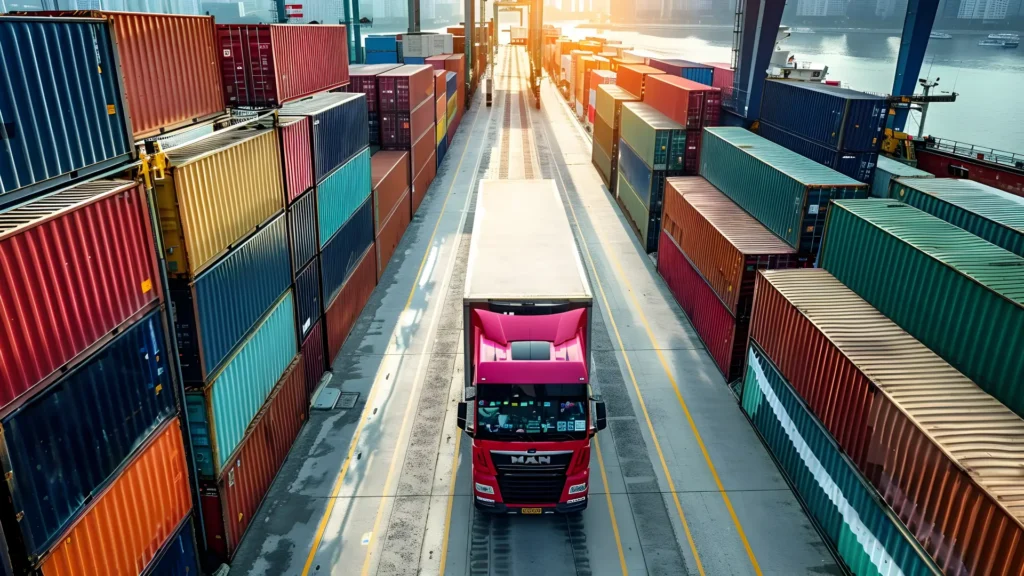
South Africa’s freight industry is once again confronting serious disruption at the Port of Durban. In August 2026, operational problems at the Durban Gateway Terminal (DGT) created substantial vessel, yard and landside congestion, affecting importers, exporters, transporters and cargo owners across the supply chain.
The disruption followed the mid-August implementation of the terminal’s new NAVIS N4 operating system. Industry bodies reported that weekly container throughput subsequently fell by 26%, while terminal waiting times reached approximately 8 to 12 days. Average Durban port-call times reportedly increased from under five days in late June to more than 12 days by late August.
For cargo owners, however, the issue extends beyond ships waiting outside the harbour. Every additional hour that goods remain stationary can increase exposure to theft, damage, temperature fluctuations, handling problems and supply-chain interruption. It can also generate substantial additional costs.
This raises an important insurance question: what happens when goods covered by Goods in Transit Insurance are caught in a major port disruption?
Quick Answer
Goods in Transit Insurance generally protects insured cargo against specified physical loss or damage while it is being transported, subject to the policy’s terms, conditions and exclusions. A delay at a port does not necessarily constitute an insured loss. Costs such as lost sales, contractual penalties, demurrage or financial losses caused purely by late delivery may not be covered unless specifically provided for. However, if cargo suffers an insured form of physical loss or damage while in transit or during an insured stage of the journey, the circumstances and policy wording will determine whether a claim may respond.
What Is Happening at Durban Gateway Terminal?
Durban Gateway Terminal, formerly known as Durban Container Terminal Pier 2, underwent a planned transition to its independent NAVIS N4 terminal operating system in August 2026. The system cutover began on 15 August, with vessel and landside operations temporarily suspended while operational information was migrated and tested.
Although the implementation was completed and the system subsequently reported as stable, a significant operational backlog developed. Existing equipment, yard and landside constraints added to the pressure, slowing the movement of containers through the terminal.
| Durban Gateway Terminal Indicator | Reported Position |
|---|---|
| Weekly throughput after NAVIS N4 cutover | Down approximately 26% |
| Reported terminal waits | Approximately 8–12 days |
| Average Durban port-call time | More than 12 days by late August |
| Previous average port-call time | Under 5 days in late June |
| Transporter time in port precinct | Reportedly increased by more than 50% over three months |
The South African Freight and Logistics Association (SAFLA) and the Road Freight Association (RFA) responded by calling for a coordinated recovery plan covering vessel operations, the terminal yard, landside movements, equipment and cargo evacuation.
Supply-Chain Risk Insight: Port congestion does not leave cargo risk standing still. The longer goods remain within a disrupted supply chain, the longer they may be exposed to operational, security and environmental risks.
Why Durban Port Delays Matter to Cargo Owners
For an importer or exporter, a container is not simply another unit sitting in a terminal stack. It may contain hundreds of thousands or even millions of rand worth of stock, raw materials, machinery, components, food products or other commercially important goods.
When the logistics chain operates normally, the cargo moves through a planned sequence: collection, road transport, terminal handling, shipping, discharge and final delivery. Congestion interrupts that sequence and increases the amount of time goods remain exposed within it.
Extended delays can create several different exposures:
- Longer periods during which valuable cargo remains stationary.
- Increased exposure to theft, pilferage or tampering.
- Additional handling as logistics arrangements change.
- Greater pressure on refrigerated and temperature-sensitive cargo.
- Truck delays and extended waiting periods outside or around terminal facilities.
- Missed vessels and cargo being rolled onto later sailings.
- Delayed deliveries to customers or production facilities.
- Additional storage, detention and demurrage costs.
- Potential deterioration of perishable goods.
- Disruption to manufacturing and retail supply chains.
Crucially, these consequences are not necessarily treated in the same way by an insurance policy. Understanding the difference between physical cargo damage and financial loss caused by delay is therefore essential.
Reefer Cargo Has Been Particularly Exposed
The August disruption has been particularly concerning for refrigerated or reefer cargo. Durban is a critical export gateway for South African agricultural products, including large volumes of citrus and other temperature-sensitive produce.
Recent reports indicate that trucks carrying reefer containers experienced waits of up to 30 hours while attempting to deliver export cargo. Some fruit consignments reportedly suffered quality deterioration after extended periods without effective refrigeration and were subsequently rejected for export.
By 27 August, overall yard pressure was beginning to ease, with reported stack occupancy declining from 89.2% to 73.8% over two days. However, reefer stack occupancy was still reported at 110%, demonstrating the continued pressure on temperature-controlled cargo.
Cold-Chain Warning: For refrigerated cargo, a logistics delay can become a physical cargo-loss event if temperature control fails and the goods deteriorate. Whether that loss is insured will depend on the cause of the damage and the specific GIT policy wording.
Why Refrigerated Goods Carry a Different Risk
A container carrying machinery can be delayed for several days without the cargo necessarily changing physically. Perishable goods are different. Their condition can deteriorate simply because time and temperature are critical parts of the supply chain.
Reefer containers rely on refrigeration equipment, an appropriate power source and effective monitoring to maintain the required temperature. If any part of that system fails, the cargo can potentially suffer temperature deviation, deterioration or spoilage.
The distinction becomes particularly important for insurance. If produce loses market value simply because it arrives late, that is different from produce suffering physical deterioration following an insured incident. The policy wording, insured perils, exclusions and actual cause of the loss will all matter.
The Critical Question: Does GIT Insurance Cover Port Delays?
Port delay itself should not automatically be treated as a Goods in Transit Insurance claim. GIT Insurance is primarily intended to protect goods against specified risks of physical loss or damage while they are being transported, subject to the scope of the individual policy.
Consider a container carrying R800,000 worth of goods that arrives five days later than expected. If the goods remain completely undamaged, the fact that the customer receives them late does not necessarily create a valid GIT claim.
If those same goods suffer physical damage during an insured stage of transit, however, the situation may be different. The insurer would need to consider what caused the damage, when it occurred and whether the event falls within the policy’s insured cover.
| Scenario | Potential Insurance Consideration |
|---|---|
| Cargo arrives late but undamaged | Delay alone may not constitute an insured GIT loss. |
| Customer cancels an order because delivery was late | Loss of sale or consequential financial loss may be excluded unless specifically covered. |
| Cargo is stolen while within an insured transit stage | May be considered subject to theft cover, security conditions and policy wording. |
| Cargo is physically damaged during handling | May potentially be covered depending on the cause and policy terms. |
| Refrigerated cargo deteriorates | Cause of deterioration, refrigeration conditions and exclusions become critical. |
| Demurrage or storage charges increase | These costs should not automatically be assumed to be covered by GIT Insurance. |
This distinction is one of the most important lessons businesses can take from the current Durban disruption. Goods in Transit Insurance protects against defined insured risks—it does not automatically insure every commercial consequence of a disrupted supply chain.
When Does Goods in Transit Insurance Cover Actually Begin and End?
The Durban port disruption raises another question that transporters and cargo owners should understand clearly: when are goods actually considered “in transit” for insurance purposes?
There is no single answer that applies to every Goods in Transit Insurance policy. Cover may begin when goods are collected from the point of origin and continue until delivery at the agreed destination, but policies can define transit differently and may contain specific provisions relating to temporary storage, loading, unloading, depots, ports and other interruptions during the journey.
This distinction becomes particularly important when a container spends several additional days at a congested terminal. Businesses should not assume that cargo remains insured indefinitely simply because its final delivery has not yet taken place.
Important: The definition of “transit” in your policy can determine whether cargo is insured while temporarily stored, delayed at a terminal or waiting for onward transportation. Check the wording before a disruption occurs.
Temporary Storage Can Create an Insurance Grey Area
Modern freight movements rarely involve goods travelling continuously from collection to final destination. Cargo may spend time at warehouses, consolidation facilities, depots, container terminals or other intermediate locations.
During normal operations these periods may be relatively short. When congestion develops, however, what was intended to be a temporary interruption can become an extended stay.
A business should therefore understand whether its GIT policy provides cover during temporary storage incidental to transit, whether a maximum period applies and whether particular locations or storage arrangements create additional conditions.
Cargo Theft Risk Does Not Disappear Inside a Congested Supply Chain
South African cargo operators already operate within a challenging security environment. Port disruption can add another layer of exposure because valuable goods may remain stationary for longer than originally planned and transport schedules can become unpredictable.
Delays can also result in trucks waiting for extended periods, collections taking place outside normal schedules and drivers being required to alter planned routes or stopping points. Each change can potentially affect the security controls that were designed around the original journey.
For high-value cargo, this makes communication between the cargo owner, transporter, logistics provider and insurer particularly important.
Security Measures During Extended Delays
- Maintain real-time visibility of vehicles and high-value loads where tracking technology is available.
- Avoid unnecessary disclosure of cargo contents, values and collection schedules.
- Review approved stopping and overnight parking arrangements if schedules change.
- Ensure drivers understand escalation procedures when terminal access is delayed.
- Maintain communication between drivers, controllers and logistics coordinators.
- Check whether route deviations or unplanned overnight stops could affect insurance conditions.
- Report suspicious activity or security incidents immediately.
- Retain accurate records of delays, route changes and instructions issued to drivers.
These measures do not guarantee that a loss will be prevented, but they can reduce exposure and help demonstrate that reasonable precautions were taken to protect the cargo.
Truck Queues Create Their Own GIT Risks
The effects of port congestion extend beyond the terminal itself. When container movements slow, trucks can spend significantly longer waiting to enter, collect or deliver cargo.
This matters because a truck carrying valuable goods is effectively a mobile warehouse. When it becomes stationary for extended periods, its risk profile can change.
| Extended Truck Delay | Potential Cargo Risk |
|---|---|
| Long roadside or staging-area waits | Greater exposure to theft, tampering and opportunistic crime. |
| Driver reaches permitted working limits | An unplanned stop or driver change may become necessary. |
| Original secure parking plan becomes impractical | The vehicle may need to stop at an alternative location. |
| Collection or delivery moves into the night | The journey may take place under different security conditions. |
| Route or schedule changes | Existing risk-management arrangements may no longer match the journey. |
| Reefer truck waits for extended periods | Fuel, refrigeration and temperature management become increasingly important. |
Transporters should therefore treat port congestion as an operational risk that needs active management rather than simply waiting for the queue to clear.
Who Carries the Risk: Importer, Exporter or Transporter?
When cargo is delayed or damaged, one of the first questions is often: who is financially responsible?
The answer depends on the commercial arrangements between the parties. The cargo owner, seller, buyer, transporter, freight forwarder and shipping line may each have different responsibilities at different stages of the journey.
This is why businesses should not confuse a transporter’s Goods in Transit Insurance with comprehensive protection for every financial interest associated with the cargo.
Why Incoterms Matter During Port Disruption
For international shipments, the agreed Incoterms can play an important role in determining when risk transfers from seller to buyer and which party is responsible for particular transport and insurance arrangements.
Terms such as FOB, CIF, CFR, FCA and DDP allocate responsibilities differently. A business importing or exporting through Durban should therefore know which Incoterm applies to the transaction and at what point it assumes the risk associated with the goods.
This becomes especially important when a shipment is delayed at a port. The company experiencing the commercial consequences of the delay is not necessarily the same party that carries the insured risk of physical loss or damage at that particular stage.
Contract Risk Insight: Insurance cannot be considered in isolation from the sales and transport contract. Understanding where risk transfers can be just as important as understanding what the GIT policy covers.
Demurrage, Detention and Storage Costs
Port congestion can create substantial costs even when the cargo itself remains completely undamaged. Containers may remain at terminals longer than expected, equipment may not be returned within agreed periods and businesses may incur additional storage or transport expenses.
Depending on the circumstances, businesses may encounter charges associated with demurrage, detention, storage and additional transport movements.
These costs should not automatically be assumed to fall within standard Goods in Transit Insurance. A GIT policy primarily addresses the insured cargo risks described in its wording. Purely financial or operational costs resulting from congestion may fall outside that scope unless specific additional cover applies.
Delay Versus Physical Damage: The Difference Matters
For insurance purposes, one of the most important distinctions arising from the Durban port situation is the difference between a delayed shipment and physically damaged cargo.
| Example | What Happened? |
|---|---|
| Machinery arrives seven days late but remains undamaged | Primarily a delay and commercial disruption issue. |
| Goods are physically damaged during additional handling | There may be a physical cargo-loss event requiring assessment against the policy. |
| Retail stock misses a promotional deadline | The goods may be physically sound despite the business suffering a financial loss. |
| Cargo is stolen during an insured stage of transit | A physical loss has occurred, subject to applicable theft cover and policy conditions. |
| Fresh produce deteriorates following a temperature-control incident | Physical deterioration may have occurred, but the cause and policy wording remain critical. |
This is why businesses should avoid asking only, “Are we covered for the Durban port delays?”
A more useful question is: “If our cargo suffers loss or damage while caught in the disruption, under what circumstances will our Goods in Transit Insurance respond?”
Spoilage and Deterioration Require Particular Attention
For food, agricultural products, pharmaceuticals and other temperature-sensitive goods, the distinction between delay and physical damage can become particularly complicated.
A perishable product naturally has a limited usable life. If it deteriorates purely because a journey takes longer than expected, the insurance outcome may differ from a situation where deterioration results from an insured event such as specified physical damage or a covered refrigeration incident.
Businesses transporting refrigerated or perishable cargo should therefore examine their policy wording carefully for provisions relating to deterioration, temperature variation, refrigeration equipment, delay and inherent vice or the natural characteristics of the goods.
Reefer Cargo Insight: When temperature-sensitive goods are involved, knowing that you have “GIT Insurance” is not enough. The causes of spoilage or deterioration that are actually insured need to be understood before the load moves.
How Transporters Can Protect Cargo During Port Congestion
The Durban disruption demonstrates why cargo risk management cannot begin only after something goes wrong. When terminal congestion increases, transporters, freight operators and cargo owners should reassess how loads are being managed throughout the affected journey.
The appropriate response will depend on the cargo, route and contractual arrangements, but the objective remains the same: reduce avoidable exposure while maintaining a clear record of what happened to the goods throughout transit.
Before the Load Moves
- Confirm current terminal conditions and expected collection or delivery delays.
- Check whether the planned journey can still be completed within normal operating and security arrangements.
- Review the cargo value against the applicable GIT Insurance limit.
- Confirm that high-value, refrigerated or unusual cargo is correctly declared where required.
- Ensure vehicle tracking, communication and security systems are operational.
- Confirm approved routes, stopping points and overnight parking arrangements.
- Review temperature requirements for refrigerated and perishable cargo.
- Check whether extended delays could affect any policy conditions.
While the Cargo Is Delayed
- Maintain communication with drivers and logistics coordinators.
- Record significant changes to collection, delivery and terminal appointment times.
- Monitor vehicle and cargo location where appropriate.
- Keep temperature records for refrigerated cargo.
- Document unplanned stops, route changes or overnight delays.
- Escalate security concerns rather than allowing drivers to improvise unnecessarily.
- Notify relevant parties promptly if cargo condition may be deteriorating.
Good Risk Management Creates Evidence: Tracking records, temperature logs, delivery documentation and photographs can become extremely important when establishing what happened to cargo and when the loss occurred.
Documentation Can Make or Break a Cargo Claim
When cargo finally arrives after an extended delay, there may be pressure to unload it and move on as quickly as possible. If there are signs of damage, however, this is precisely when careful documentation becomes important.
A GIT claim may require evidence establishing the condition of the goods, the circumstances of the loss and when the damage is believed to have occurred. Poor documentation can make an already complicated claim more difficult to assess.
If Cargo Arrives Damaged, Consider Recording:
- Photographs and video before unloading where practical.
- Condition of the container, trailer, seals and packaging.
- Seal numbers and any evidence of tampering.
- Nature and extent of visible cargo damage.
- Temperature records for refrigerated loads.
- Collection and delivery dates and times.
- Terminal and transport delay records.
- Vehicle tracking information where relevant.
- Delivery notes and exceptions recorded by the receiving party.
- Correspondence with transporters, freight forwarders and other parties involved.
The insurer or broker should also be notified as soon as reasonably possible in accordance with the policy requirements. Where significant cargo damage has occurred, instructions may be provided regarding assessment, survey, salvage or other steps.
Do Not Dispose of Damaged Cargo Too Quickly
When goods are spoiled, contaminated or badly damaged, the immediate reaction may be to dispose of them. However, doing so before the insurer or appointed assessor has had an opportunity to evaluate the loss could create difficulties.
Unless there is an urgent health, safety or legal reason requiring immediate disposal, businesses should obtain guidance from their broker or insurer before destroying damaged goods. Photographic evidence, independent assessments and salvage information may all become relevant to the claim.
What Should Businesses Check in Their GIT Insurance Right Now?
The current Durban port delays provide a practical opportunity for South African businesses to review their Goods in Transit Insurance before the next load moves.
| Policy Check | Question to Ask |
|---|---|
| Basis of cover | Which causes of physical loss or damage are insured? |
| Definition of transit | Exactly when does cover begin and end? |
| Temporary storage | Is cargo covered while temporarily stored as part of the journey? |
| Maximum values | Is the maximum value of cargo on any one vehicle or conveyance adequate? |
| Theft conditions | What tracking, security, parking or vehicle requirements apply? |
| Refrigerated cargo | How does the policy deal with temperature variation, deterioration or refrigeration failure? |
| Delay | What losses arising purely from delay are excluded? |
| High-risk goods | Do particular commodities need to be declared or separately agreed? |
| Territorial limits | Does the policy cover every region or country through which the cargo travels? |
| Claims procedure | Who must be contacted and what evidence is required following a loss? |
For businesses moving significant volumes of cargo through Durban, these should not be theoretical questions. A policy review can identify gaps before congestion, theft, physical damage or another logistics disruption turns them into an expensive problem.
Why Cargo Values Need Regular Review
Another potential problem is assuming that insurance limits established several years ago remain adequate today. Changes in commodity prices, exchange rates, replacement costs and shipment sizes can significantly increase the value carried in a single load or container.
A transporter may previously have moved loads worth R500,000 but now regularly carry cargo worth substantially more. If the applicable policy limit has not been reviewed, the business could face a significant uninsured exposure.
High-value cargo should therefore be identified before transit begins, and businesses should understand any maximum limits, declaration requirements or special conditions contained in their policy.
The Durban Crisis Is a Reminder to Review Supply-Chain Risk
South African transport and logistics businesses cannot control every factor affecting the country’s ports. A technology cutover, equipment constraint, vessel backlog or terminal congestion can disrupt even the best-planned shipment.
What businesses can control is how prepared they are when those disruptions occur.
That means understanding where cargo is, who is responsible for it, how it is being protected, what contractual obligations apply and whether the insurance programme reflects the actual risks being carried.
Key Lesson from Durban: The question is not only how quickly cargo can move through the supply chain. Businesses also need to understand what happens financially when it cannot.
Goods in Transit Insurance Should Match the Cargo You Actually Move
A generic approach to cargo insurance can leave important exposures overlooked. The risks associated with transporting fresh produce are very different from those involved in moving electronics, industrial machinery, building materials or high-value retail stock.
The same applies to the logistics operation itself. A local transporter making short-distance deliveries has a different exposure from an operator moving containers between inland warehouses and Durban, or a cross-border fleet transporting goods throughout Southern Africa.
Effective Goods in Transit Insurance should therefore be considered alongside the type of cargo, maximum load values, routes travelled, vehicle security, storage arrangements, subcontractors and the way goods actually move through the supply chain.
When Should You Speak to Your GIT Insurance Adviser?
Businesses should not wait for annual renewal if their transport operation has changed materially. A discussion with an insurance adviser may be appropriate when:
- The value of individual loads has increased.
- You begin transporting a new type of cargo.
- You start carrying refrigerated or perishable goods.
- You add new routes or cross-border operations.
- Your business begins using subcontracted transporters.
- Goods spend longer periods in temporary storage during transit.
- Customer contracts change your responsibility for cargo.
- You are uncertain whether port, depot or warehouse stages fall within your existing cover.
- Current logistics disruptions materially change the way your cargo is being transported.
The Durban port delays of 2026 demonstrate why this review matters. The cargo may be the same, but when the way it moves changes, the risk can change with it.
Key Takeaways for South African Transporters and Cargo Owners
- Durban port congestion can increase the amount of time cargo remains exposed within the supply chain.
- A delay does not automatically constitute a Goods in Transit Insurance claim.
- Physical loss or damage and financial loss caused purely by late delivery are different insurance issues.
- Refrigerated and perishable cargo requires particular attention because temperature deviations and extended transit times can result in physical deterioration.
- The definition of “transit” in the policy should be checked carefully, particularly where goods remain temporarily at terminals, depots or other intermediate locations.
- Extended truck queues can change security arrangements, stopping points and driver schedules.
- Demurrage, detention, storage costs, lost sales and contractual penalties should not automatically be assumed to be covered by GIT Insurance.
- Cargo values and policy limits should be reviewed regularly.
- Tracking records, photographs, temperature logs and delivery documentation can become important evidence following a cargo loss.
- Businesses should understand their GIT Insurance before a disruption occurs—not while trying to manage a claim.
Frequently Asked Questions About Durban Port Delays and GIT Insurance
A port delay does not automatically create an insured GIT claim. Goods in Transit Insurance generally responds to specified physical loss or damage, subject to the individual policy. Financial losses caused purely by delay may be excluded unless specific cover has been arranged.
It depends on how the policy defines transit and temporary storage. Some policies may provide cover during temporary storage incidental to the insured journey, subject to conditions or time limits. Businesses should check their specific policy wording rather than assume cover continues indefinitely.
Demurrage and similar costs should not automatically be assumed to be covered by standard Goods in Transit Insurance. They are generally financial or operational costs rather than physical damage to the cargo. Any applicable cover will depend on the specific insurance arrangement.
Potential cover will depend on the policy’s theft protection, the stage of transit and compliance with applicable security conditions. Tracking, approved parking, vehicle security and unattended-vehicle requirements may all be relevant when a theft claim is assessed.
The cause of the spoilage is critical. Deterioration caused purely by delay may be treated differently from physical deterioration resulting from an insured refrigeration or temperature-control incident. Policy wording relating to deterioration, temperature variation, refrigeration failure, delay and inherent vice should be reviewed carefully.
Responsibility depends on the contracts between the parties and the stage of the journey. For international trade, the applicable Incoterm can help determine when risk transfers between seller and buyer. Transport contracts and insurance arrangements should also be considered.
Document the condition of the cargo, packaging, container or trailer and seals as soon as possible. Keep photographs, delivery records, tracking information and temperature data where relevant, and notify your broker or insurer promptly in accordance with the policy’s claims requirements.
The disruption provides a useful reason to review existing cover. Businesses should understand transit definitions, temporary storage provisions, cargo limits, theft conditions, refrigerated cargo requirements and exclusions relating to delay or consequential financial loss.
Conclusion: Durban’s Port Delays Are Also a Cargo Risk Warning
The disruption at Durban Gateway Terminal in August 2026 is more than a port-efficiency story. For South African importers, exporters, transporters and logistics businesses, it demonstrates how quickly an operational problem can change the risk surrounding valuable cargo.
When containers remain stationary for days longer than planned, trucks spend extended periods waiting for access and refrigerated cargo operates under pressure, the potential consequences extend throughout the supply chain.
Some consequences are operational: missed delivery dates, additional storage, demurrage, disrupted production and unhappy customers. Others can involve actual physical loss or damage through theft, handling incidents, tampering or deterioration.
Understanding the difference is essential because Goods in Transit Insurance does not automatically cover every cost associated with a delayed shipment.
Businesses moving cargo through Durban should use the current disruption as an opportunity to review how their insurance works in practice. Know when transit cover begins and ends. Understand temporary storage provisions. Check cargo limits and security conditions. And if you transport refrigerated goods, make sure you understand exactly how temperature-related deterioration is treated.
South Africa’s logistics environment will continue to present challenges. The businesses best positioned to manage them will be those that combine strong operational controls with Goods in Transit Insurance designed around the cargo they actually move and the risks they actually face.
Protect Your Cargo with the Right GIT Insurance
Whether your business transports containers between Durban and inland distribution centres, moves high-value goods across South Africa or manages refrigerated and time-sensitive cargo, the right insurance protection starts with understanding your actual exposure.
Speak to Cross-Cover Insurance Consultants about specialist Goods in Transit Insurance designed for South African transport and logistics risks.
Related Articles
- Goods in Transit Insurance in South Africa 2026: The Complete Guide
- The Hidden Cost of Cargo Theft in South Africa
- Truck Hijacking Trends in South Africa During 2026
- Top Risks to Goods in Transit in South Africa
- Goods in Transit Insurance for Businesses in South Africa
- Does Goods in Transit Insurance Cover Fire?
Disclaimer: This article is intended for general informational purposes only and does not constitute insurance, legal, logistics or risk-management advice. Goods in Transit Insurance policies differ between insurers and may contain specific limits, conditions, warranties, exclusions and security requirements. Cover for delay, deterioration, refrigerated cargo, temporary storage, theft and consequential losses depends on the individual policy wording and circumstances of the loss. Businesses should review their policy documentation and obtain professional advice regarding their specific requirements.